
Where Mastery in Music Meets Precision in Piano Technology Across the DMV
Expert Piano Tuning, Action Regulation,
& Seasonal Climate Control by Seong Nam
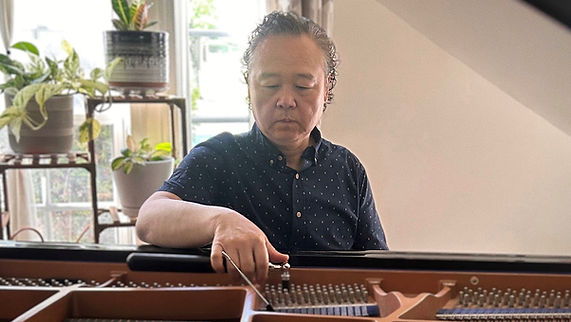
For over 20 years, Seong Nam of DMV Piano Clinic has been the trusted expert for piano care, tuning, and restoration across Washington D.C., Maryland, and Virginia.
What sets Seong apart is his rare musician's ear. In addition to his advanced musical degrees (Master's and Doctoral studies), he brings 18 years of dedicated service as a former adjunct professor at the George Mason University School of Music and 25 years of experience as a professional chorister with the Washington National Opera.
Going beyond simple maintenance, Seong treats every instrument with meticulous care and acoustic artistry. From subtle tuning adjustments to comprehensive action regulation and climate control, he ensures your piano sings with a richness, clarity, and resonance you may have forgotten was possible.


Did You Know?
A piano's lifespan is typically around 100 years, similar to a person's, but this can change drastically depending on its environment and how well it has been maintained. Based on my 20 years of experience, I've seen that most pianos do not reach their full potential lifespan. Instead, they are often discarded as junk or require costly rebuilding.
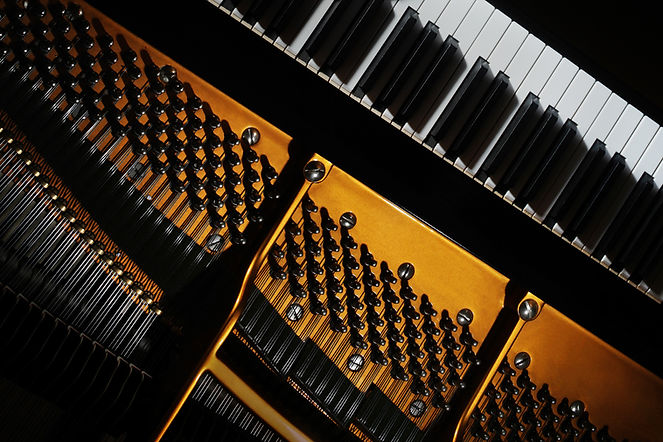
One of the main reasons pianos don't last as long as they could is changes in humidity and temperature. For example, in the DMV area, summers are hot and humid, while winters are cold and dry. A piano consists of over 12,000 parts, most of which are made of wood and metal. Because of this, when humidity and temperature increase, these parts expand, and when they decrease, the parts contract. The strings also expand and contract in the same way, which causes the piano's pitch to change. Over time, other parts can also shift from their original positions, and sometimes parts can even break.
Another reason pianos don't reach their potential lifespan is lack of maintenance. In my work, I often encounter pianos that cannot be tuned in a single session, or pianos where parts are so damaged that repairs are needed at the same time as tuning. Pianos that haven't been tuned for three to five years or more have experienced repeated pitch fluctuations due to humidity and temperature changes. As a result, their overall pitch often drops significantly, requiring two or more tunings to bring them back to the standard pitch. This long-term exposure to environmental changes can also cause parts to shift significantly from their proper positions or become damaged.
For these reasons, we generally recommend tuning home pianos twice a year – once after summer and once after winter. We also recommend having the action parts adjusted every 10 years. This regular maintenance allows for checking the piano's current condition and addressing any issues. This ensures the piano can continue to function properly as a live instrument, rather than just being a piece of furniture, and helps maintain its health for a long time.
The piano is a live instrument. Only when it is well-maintained can it fulfill its role as a live instrument and blend harmoniously with other instruments.
My Services
Standard Piano Tuning & Voicing
Meticulous pitch stabilization and warm tone adjustment by a former GMU School of Music professor.
Action Regulation & Minor Repairs
Expert calibration for a responsive, even touch. Quick fixes for broken strings, sticky keys, and squeaky pedals.
Dampp-Chaser Installation
Certified climate control system installation to protect your piano from extreme DMV seasonal humidity shifts.
FAQ (Frequently Asked Questions)
How much do you charge for a piano tuning?
I charge a base fee of $200 for a standard tuning. If the piano has not been maintained for a long time, it may require additional work. In this case, I will always explain and discuss pricing with you beforehand. Please note that I also charge an additional 76 cents per mile (IRS standard rate as of July 2026) for any location that is greater than 20 miles from Ellicott City, MD.
Is it possible for the travel charge to be waived for clients outside of the 20 mile radius?
Though not guaranteed, I will do my best to combine multiple tunings in the area and waive the travel cost. If I am able to schedule another tuning nearby on the same day, the travel cost can be waived. If I'm unable to schedule you together with other tunings nearby, I will let you know ahead of time how much the additional travel cost will be, so that there will never be any surprise charges.
What should I expect during a tuning appointment?
I will arrive at the scheduled location and time with my tuning equipment. I will need access to the piano and enough space to work comfortably around it. The tuning process is not very loud, but it will sound repetitive: I will continually play the same patterns over and over as I make adjustments to ensure perfect consistency between all the notes. To help me do my best work for you, it's really helpful to keep the environment as quiet as possible during the appointment. This means maybe holding off on TV watching, radio listening, phone calls, or conversations for a little while. Thanks so much for your understanding!
How long does a typical piano tuning take?
A standard piano tuning usually takes around 1 hour, depending on the current condition of your piano and how recently it was last tuned. Pianos that haven't been tuned in a long time or have significant pitch issues may require more time.
How often should I have my piano tuned?
Based on my experience, I generally recommend tuning home pianos twice a year: once after the humid summer months and again after the dry winter heating season. This helps to counteract the effects of seasonal changes on your piano's pitch and overall health.
What happens if I don't tune my piano regularly?
Neglecting regular tuning can lead to several issues. The piano's pitch can drop significantly over time, sometimes requiring multiple tunings to bring it back to standard. Furthermore, the constant expansion and contraction of parts due to environmental changes can cause them to shift, become damaged, or even break, potentially leading to costly repairs or a shortened lifespan for your instrument.